

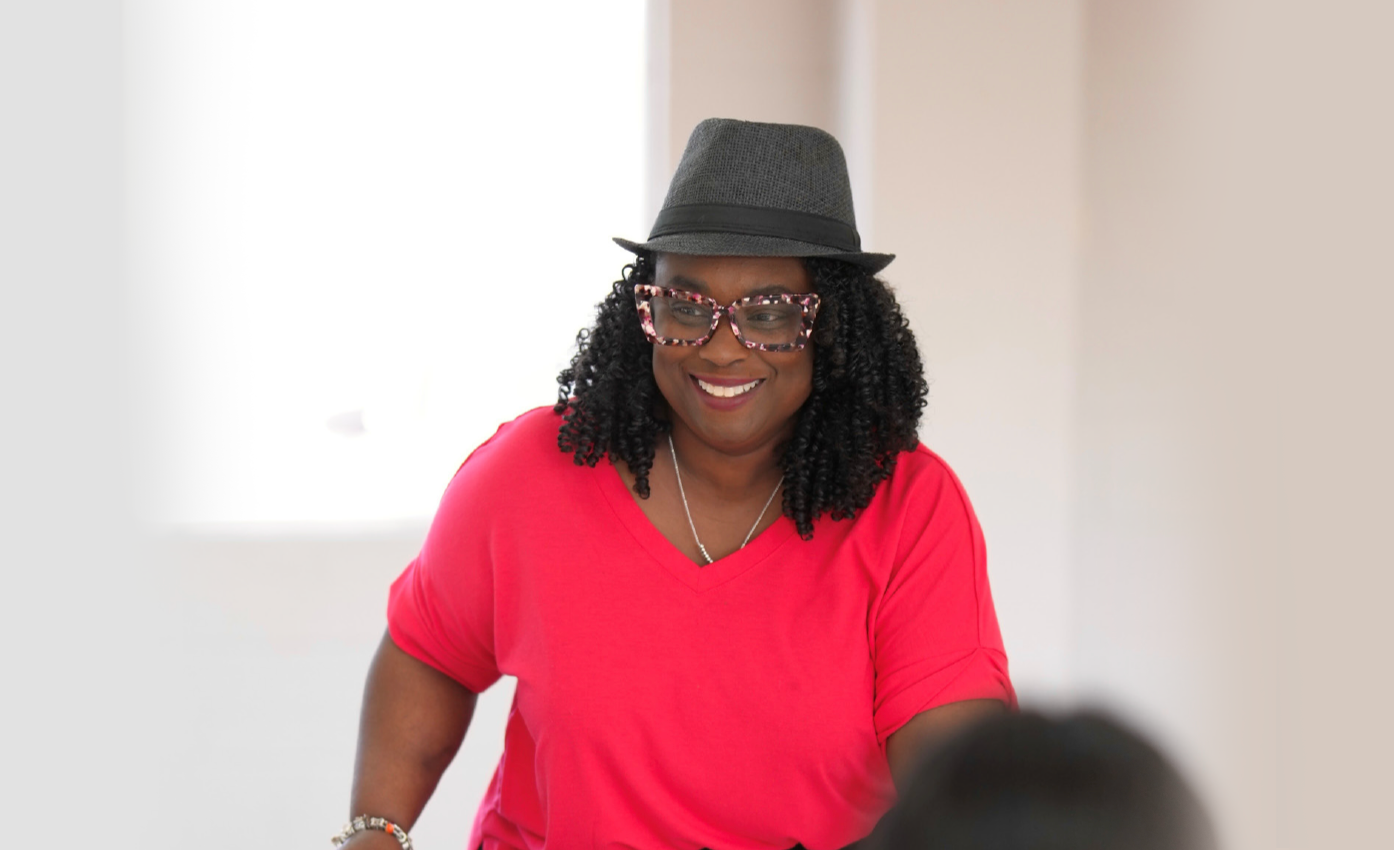
Every organization experiences conflict. How an organization or its board deals with conflict can affect the success or effectiveness of their mission. As a leadership coach and nonprofit expert, Sabrina Walker Hernandez has experience and insight in dealing with conflict within a team or board.
“Questions and conflict are not necessarily a bad thing,” said Walker Hernandez. “It is how you manage that conflict, because at the end of the day, you’re trying to get to some innovative solutions.”
Poor communication is the main reason for conflict. Walker Hernandez emphasizes being aware of how different people communicate, how words are perceived versus what was meant, and repeated actions that led to the conflict. All of these must be taken into consideration in finding a resolution.
“When you are conversing, check and see how many I’s you use, like ‘I was trying to do this’ or ‘you were trying to do that.’ You have to balance that conversation,” Walker Hernandez said.
 Everyone has a default conflict communication style. Knowing the strengths and weaknesses of one’s default style allows for better communication, less conflict, and faster resolution. Self-awareness can change one’s response from closing oneself off from others’ opinions to asking for their viewpoint. These default styles took a lifetime to learn. Learning new strategies often requires the guidance of a coach.
“When I am coaching people, they have to have an open mind to be reflective of their own behavior. If you’re coming into a coaching situation to have your viewpoints validated, you’re there for the wrong reasons, and you’re not going to get anything out of it,” said Walker Hernandez. “You have to be willing to accept the feedback, work on it, and do the assignments.”
A common workplace conflict is the “it’s not my job” mentality. Leaders must navigate this by modeling small acts and values. When team members see their leaders doing tasks that are not their job, it conveys a culture that counteracts the “it’s not my job” mentality. This culture is then reinforced when leaders acknowledge team members for doing things outside of their role.
“You know the standard you want your employees to have, so you often have to emulate that so that you can fight that ‘not my job’ mentality. You’re going to do a lot of things that are not your job,” Walker Hernandez said. “It starts at the top, and it is consistency, every day. It’s a constant evolution of working, getting along, building culture, and interacting. It never ends.”
 In board meetings, Walker Hernandez witnesses two major types of conflict. The first is when the CEO or one of the board members dominates the conversation. Working from an agenda that states who will talk about each item creates an environment where everyone’s thoughts and opinions are heard. The other common conflict is when a board allows a board bully to spew. Whether they are bullying the organization’s CEO or other board members, it is important that someone intervenes and stops the behavior.
“You might need to pull a board bully aside in private the first time it happens, and then if it doesn’t change, then at that moment, when it’s happening, you need to say something like ‘I understand what you’re saying and let’s be clear about respecting boundaries and tones.’ It needs to be said,” Walker Hernandez said.
Trust and humor help manage conflict. Walker Hernandez recommends identifying why you do not trust someone. It may be that you do not trust their competence, their ethics, or their dependability. Smile and throw in an appropriate joke when addressing them.
“Talk to the person. Say, ‘you did this, and it impacted my trust. I know you don’t want me to not trust you. How can we build this?’ We have to be willing to have the tough conversations and invest in people,” Walker Hernandez said. “You gotta throw a little humor in there. It will change the game. Use humor to your advantage.”
For more information, Sabrina Walker Hernandez can be contacted at buildingbetterboards.com and on LinkedIn.

