

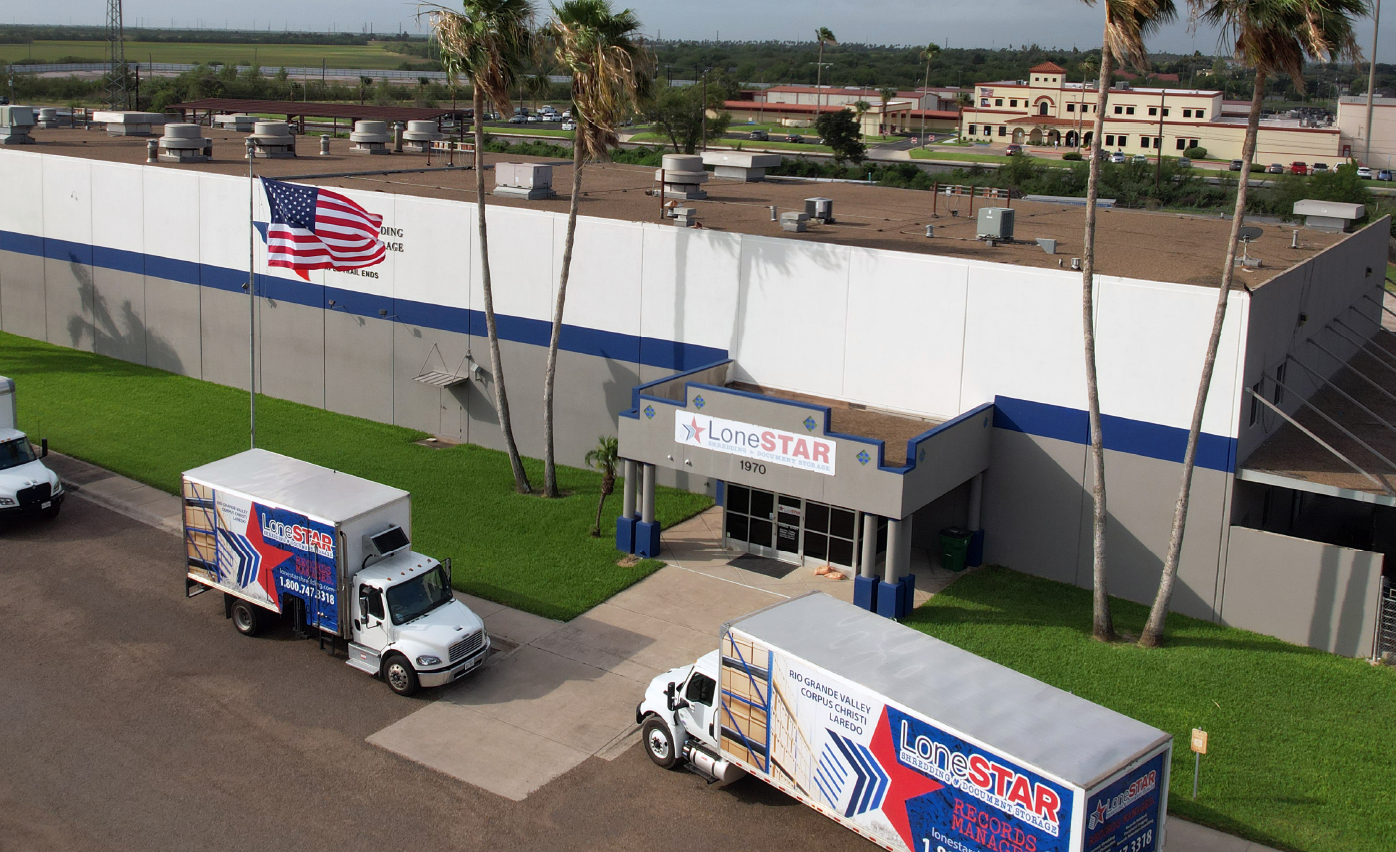
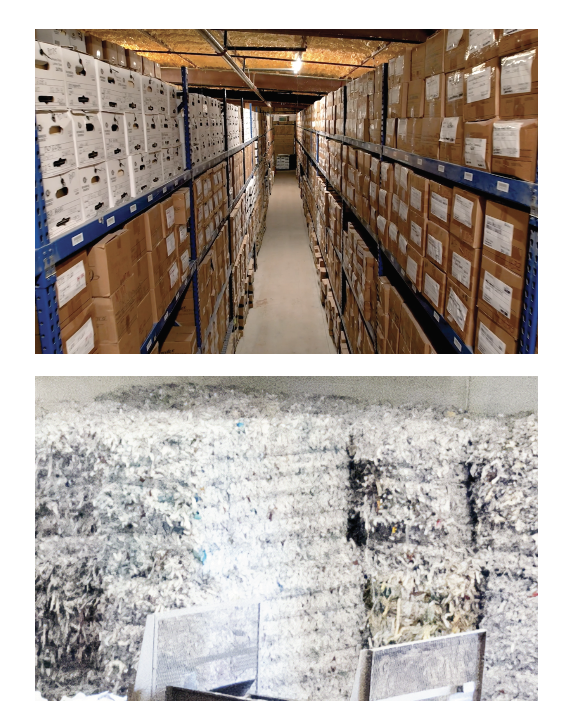
Lone Star Shredding began in 1996 as a paper shredding company and now processes between 13 and 15 tons of paper each day. As the industry evolved, so did the company — expanding into document management and overseeing more than half a million boxes of data. Their services include barcoding each box, retrieving documents on request, making copies, delivering them to clients, or converting them to digital format. With the addition of data imaging, the company has rebranded as Lone Star Document Management Solutions.
“We really try to be a holistic document management company, meaning anything having to do with your records, we can find a solution for it,” said Maritza Venecia, COO and managing partner.
Digital imaging has transformed many industries, most notably the medical field, by significantly reducing the reliance on paper records. Electronic medical records, or EMRs, were first introduced by Mayo Clinic in the 1960s, became more common in the 1990s, and grew rapidly after government incentives in 2009. EMRs allow doctors to make electronic entries in a patient’s chart that can be viewed instantly by other physicians within the same hospital or medical system — eliminating the need for printed charts and paperwork. Patients can also access their lab or scan results through a secure portal or mobile app, further minimizing paper use and streamlining communication.
 Digital imaging was once seen as the perfect environmental solution to eliminate paper waste, but it comes with its own challenges. Data centers that store electronic files account for about 2% of all U.S. electricity consumption, and large facilities can use one to five million gallons of water each day for cooling. In addition to the environmental impact, cybersecurity threats pose a growing concern — cybercriminals have targeted organizations that rely entirely on digital records, crippling hospitals, schools, city governments, and other institutions.
“If you had asked me 10 years ago where we’d be today, I would think that there’d be no paper — but because of cyber criminals and people trying to steal information, it really just holds entities hostage to the paperwork.”
Transitioning from paper to digital storage can seem like a daunting task, but Lone Star Document Management Solutions helps businesses navigate the process with ease. It begins by assessing the retention requirements for each type of document and identifying the most practical, cost-effective approach. Records with shorter retention periods are often best kept as paper files, securely stored in Lone Star’s warehouse until they can be destroyed once they’re no longer legally required. For documents that must be preserved long-term, digital storage offers a smarter alternative — with electronic reminders ensuring nothing is overlooked when retention dates arrive.
“It’s all about your needs. It all begins with retention,” Venecia said. “The first thing you have to do is to legally protect yourself through a retention schedule. Figure out what you have to retain, and how long you have to retain it. Once you have that in place, we can come in and figure out what is the best, most cost-effective way to do it.”
Lone Star Document Management Solutions also offers e-cycling, a service focused on responsibly handling old electronics. The process involves evaluating whether an item can be resold as is or should be broken down and recycled for its raw materials. Hard drives, for example, contain valuable metals such as gold, silver, platinum, and palladium — but they can be even more valuable when securely wiped and reused in working condition.
“We’re in the data protection business. We do a lot of destruction of hard drives. For us, the value is in making sure that those hard drives have been completely erased,” Venecia said.
Venecia credits the company’s success to having a great team and watching industry trends. She explains that new developments often emerge in Europe first, followed by larger U.S. markets like Dallas and Houston, before reaching smaller regions such as the Rio Grande Valley. By staying ahead of these trends, Lone Star is able to anticipate changes and maintain a competitive edge.
Venecia explained that because they operate in a tertiary market, she often anticipates challenges before they arise and feels confident in her ability to handle them. “I’ve got a great team. Most of my staff have been with me for a long time. I’ve got a couple of employees who have been with me almost my entire career,” she said.

