


The College of Health Care Professions in McAllen is expanding its academic offerings this year with the launch of a new Surgical Technology – AAS Degree program.
The 80-week program will feature small class sizes and hands-on clinical training at local health care facilities.
“One of the first things we want to talk about is our student-to-teacher ratio,” said Jay Lake, Surgical Technology Program Director. “We are intentionally limiting our cohort sizes to eight students every eight weeks to ensure the high-quality training, individualized instruction, and the development of highly skilled graduates, and also avoiding marketing saturation.”
Campus President Andrea Hernandez said the decision to launch a new program was based on extensive research and accreditation requirements.
“It’s a process; there are market surveys that need to be done,” Hernandez said. “How many students can your campus maintain at a time? There are advisory board meetings. All of this is tied into our accreditation just to make sure the programs we’re offering will have the outcomes that are required for student success.”
CHCP officials’ strong relationships with hospitals and health care providers helped pave the way for the program’s creation.
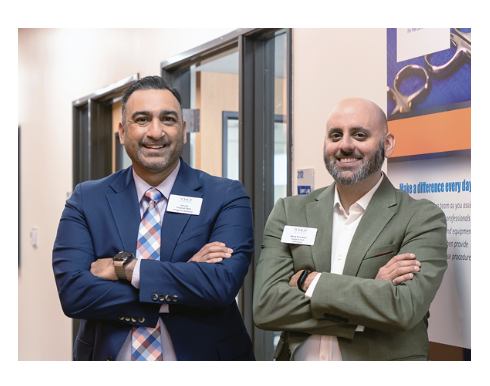 “After having done the market research, we found there is a strong need for this program from the hospitals,” Lake said.
According to school officials, CHCP will be the first institution in the Upper Valley to offer surgical technology training.
Surgical technologists play a critical role in operating rooms, assisting surgeons and ensuring procedures run smoothly.
“A surgical technologist plays an essential role in surgery,” Lake said. “Not only do they assist the surgeon with instrumentation, they also help prepare a room with equipment, as well as maintaining a surgical consciousness.”
Their responsibilities include tracking medication units and fluids such as saline and blood, labeling and handling specimens, and working closely with surgical teams to ensure specimens are delivered to laboratories.
They also collaborate with anesthesia providers, circulating nurses, and surgeons throughout procedures.
Beyond technical skills, the program emphasizes patient care and communication.
“In providing patient care, they may greet the patient in pre-op,” Lake said. “They will also meet and greet the patient in the room, which is called intra-op, and many times they are the first people they see when they wake up from the operation. Patient advocacy is a forefront focus of their surgical conscience.”
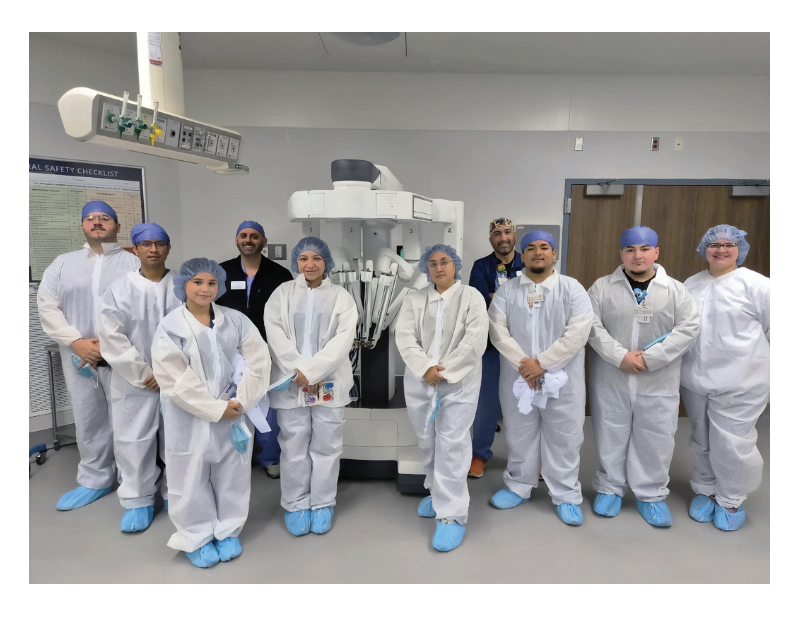 Diana De la Luz, Director of Education, said the program launch coincides with the campus’s 10-year anniversary in the community. The milestone included facility renovations to modernize educational offerings.
“After 10 years, the campus has gotten a complete facelift,” De la Luz said. “We have excellent programs on campus, outside of just the Surgical Tech Program. This new program is our baby, so when you walk in through the front door, you can get a quick snapshot of the operatory. It’s enticing, and potential students see this right away.”
Classes are underway, and administrators said student enthusiasm is high.
“Seeing the students there, seeing the excitement in their faces — it’s going to be wonderful for us as a campus that we’re producing highly skilled graduates,” De la Luz said. “Also, for the community being able to meet the needs and demands that hospital sites have out there. It’s a very proud moment.”

